By Nitin Jain
Section 105 of BNS renders every compliance manual immediately irrelevant. Device seizure signals a criminal investigation, not a regulatory inquiry. The Board’s paperwork does not address the Investigating Officer’s mandate. The compliance shield shatters at the moment of FIR registration. Criminal exposure for Directors ceased being theoretical after 2024.
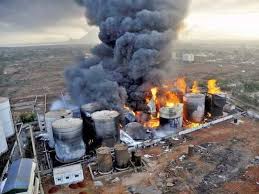
The shift in enforcement toward “culpable economy” was cemented following a high-pressure steam pipe failure at a major thermal power facility in Chhattisgarh’s Sakti district. In that incident, which resulted in over 20 fatalities, investigators bypassed lower-level management to file an FIR directly naming the Group Chairman and Board-level officials, marking the first time senior corporate leadership has been held criminally liable for “common intention” under the new criminal codes after prioritising production quotas over essential maintenance requests.
Three foundational assumptions routinely fail Boards under criminal scrutiny.
- Delegation does not quarantine liability within the plant boundary.
- Directors and Officers insurance carries conspicuous gaps against criminal prosecution.
- Voluntary cooperation with investigators is legally distinct from establishing innocence.
These assumptions survive regulatory audits but collapse decisively when the FIR arrives. The enforcement climate in 2026 has permanently abandoned its prior leniency.
The reader must care now, in 2026. Criminal exposure for Directors is no longer theoretical. The enforcement climate has permanently shifted.
The Governance Deficit Behind Every Incident
Accident investigations begin where governance documentation ends. Certification tallies and training completion rates satisfy the auditor, not the prosecutor. Generalist counsel constructs a formidable paper perimeter around operations. Criminal proceedings, however, penetrate that perimeter through a single unanswered email. The governance record exposes decision-makers, not operational systems.
A three-month-old unanswered email becomes the prosecution’s primary exhibit. Board minutes allocating two minutes to maintenance backlogs constitute gross negligence evidence. Criminal liability attaches to individuals who held authority over those decisions. Operational systems cannot be indicted; the directors who governed them can.
Concurrent criminal, environmental, and constitutional proceedings present objectively distinct procedural challenges. A police statement, made without specialist oversight, simultaneously incriminates the company before the NGT. This jurisdictional intersection demands rigorously coordinated legal representation across multiple forums. The governance framework, not the process framework, renders this challenge navigable.
The other part only looks difficult. Protecting Directors appears impossible under the wrong framework. The “process framework” asks: was the valve checked?. The “governance framework” asks: did the Board allocate funds to check it? The correct framework makes the problem manageable.
The First Forty-Eight Hours: Where Defences Dissolve
Critical defence options are forfeited before the first operational day closes. An HR report commissioned by the CEO carries no attorney-client privilege protection whatsoever. Prosecutors subpoena that document within seventy-two hours of the incident. The company’s own overnight assessment then constitutes its most damaging evidentiary disclosure.
Unadvised technical admissions by the Plant Manager enter the Case Diary irrevocably. The procedural window for quashing the FIR closes upon those recorded statements. A collective Board resolution expressing regret simultaneously neutralises each Independent Director’s separate defence. Individual liability cannot be reconstructed from a document asserting institutional solidarity .
A disciplined response architecture separates public site recovery from privileged legal analysis. External criminal counsel channels all factual findings away from unprotected internal documentation. This bifurcation preserves legal professional privilege over the actual fault determination. Boards that conflate these two channels surrender their most consequential procedural protection.
Separate counsel for the CEO, Occupier, and each Independent Director is appointed within forty-eight hours. Between days thirty and sixty, the Board systematically audits its own antecedent minutes. The Diligence Dossier is assembled before investigators which conclude their witness interview schedule. Prompt above-statutory compensation to victims demonstrably reduces the political pressure for senior-level arrests.
Three Structural Misalignments Companies Do Not See
The accident reveals a deeper structural misalignment. Companies are built to survive civil and regulatory scrutiny. They are currently operating in a criminal and public policy environment.
- Documentation Architecture- Operations teams document to optimise production cycles. Legal requires documentation that contextualises risk-based decisions. The system logs that a sensor bypass occurred. The system never logs why or what mitigation was applied. The bypass is recorded. The defense is not.
- Contractual Architecture – Employment contracts are heavy on compensation provisions. They are dangerously thin on criminal defense trigger clauses. Most indemnity provisions require Board approval before defense funding activates. The Board may be paralysed during the exact crisis requiring that approval.
- Authority Liability Mismatch- The statutory Occupier carries maximum criminal exposure. The Occupier holds no budgetary authority over safety capital. The Board withholds funds from the person legally responsible. Prosecutors use that gap to climb toward the Board directly.
What Regulators Read in a Company’s Own Documents
The company’s documentation is engineered to demonstrate procedural compliance at audit. The regulator’s investigation is focused on locating substantive accountability within that same record. These are two fundamentally incompatible reading exercises applied to identical documents. The resulting evidentiary gap is not accidental; it is architectural.
The authority ignores the 364 days of compliance. The authority finds the one unanswered “Urgent: Valve Pressure” email. Board Minutes stating “the Board noted the report” prove nothing. The tribunal looks for a Director’s follow-up question in the record. Silence in the minutes now signals acquiescence to known risk.
Investigative authorities routinely compare requested safety budgets against the Board’s approved allocations. A safety team’s formally requested sensor-replacement budget, once halved to protect the declared dividend, becomes prosecutable. Authorities characterise that budgetary decision as “culpable economy”, a calculated financial preference over foreseeable human safety. The incident is accordingly reclassified from a technical failure to a consequential governance decision.
The prosecutor interviews junior staff about actual shift practices. The SOP manual required double-lock protocols at all times. Production targets made double-lock protocols physically impossible. The manual becomes evidence of a paper safety world concealing a dangerous operational reality.
Conclusion
Four options genuinely remain open in the aftermath. Each has a specific viability condition attached-
- The privileged external audit : Viability requires that no internal draft report exists yet. Once an internal document circulates, privilege over the findings is lost.
- The Director diligence defense: Viability requires a pre-existing “dissent trail” in Board papers. If the Board never questioned the maintenance backlog, this defense fails immediately.
- Separation of counsel: Viability depends on the indemnity architecture in appointment letters. A “post-acquittal trigger” clause is useless during the first 48 hours of an arrest.
- Structured voluntary disclosure:Viability requires an untampered, timestamped, unmodified safety log. Any deletion or recalibration of sensor data after the incident destroys this option entirely.
The practitioner’s core instruction is counterintuitive. The GC’s most powerful tool in Hour 1 is structured silence. The law does not punish the context that is withheld. The law punishes the context that is surrendered prematurely.
The company that survives this process is rebuilt structurally. The rebuilding is visible in documentation, governance, and contracts. It is not visible in the court order.
Every Board decision henceforth carries a documented, expert-supported risk-rationale attachment. A deferred maintenance budget is accompanied by a formally recorded mitigation strategy. Documentation is no longer calibrated to satisfy the auditor; it is engineered to withstand adversarial cross-examination. The statutory Occupier is granted a non-overridable stop-work authority under Board resolution. Only a formal Board vote, explicitly not a unilateral CEO instruction, may suspend that authority. This constitutional arrangement closes the authority-liability gap at a structural, rather than procedural, level. Criminal knowledge at Board level consequently becomes materially harder for prosecutors to establish. Internal communication protocols are bifurcated between privileged legal channels and standard operational channels. Near-miss events are routed immediately into the privileged channel, eliminating inadvertent evidentiary disclosures in messaging applications. Director appointment letters are amended to contain advance defence-funding clauses, with pre-vetted criminal counsel already on retainer. The defence option activates automatically upon any FIR reference, removing the crisis-period boardroom deliberation that previously delayed it.
Safety has been repositioned from an operational cost line to a governance asset. The Board now treats maintenance capital allocation as a fundamental liberty-and-liability decision. The structural gap between statutory authority and criminal liability is permanently closed. The documentary record now reflects substantive accountability rather than merely documented activity.


Leave a comment