How Dismissed Whistleblower Complaints Become Prosecution Evidence

By: Nitin Jain The prosecution's case seemed thin initially. There were allegations of financial misconduct, but the transactions had board approval. Corporate records showed compliance with procedural requirements. Management maintained everything that was properly authorised. Then the prosecution produced the whistleblower complaint file. Six months before the alleged misconduct came to regulatory attention, an employee... Continue Reading →

From Process to Proof: Audit Committee Architecture, Securities-Grade Drafting, and Disclosure that Deters RPT Litigation

Author: Archana Balasubramanian Pre-IPO reorganisation work does not end with forensic RPT analysis and valuation-backed restructuring. To withstand post-listing scrutiny, companies must convert independence, fairness, and arms-length intent into provable governance through audit committee architecture, decision-trail documentation, securities-grade transaction drafting, and a transparent prospectus disclosure strategy. This is how you reduce the probability of derivative... Continue Reading →

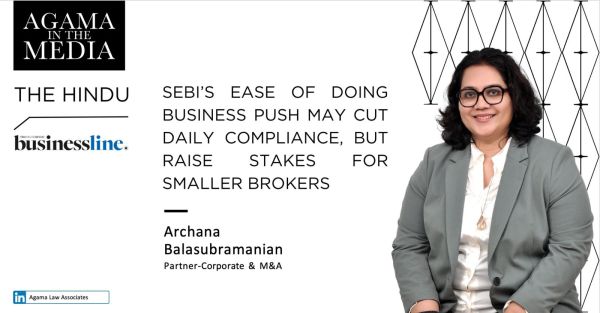
SEBI’s ease of doing business push may cut daily compliance, but raise stakes for smaller brokers.

The Hindu businessline featured our partner Archana Balasubramanian who commented that the thrust appears to be on bringing enforcement closer to home and empowering exchanges to impose penalties, though bulk and block deal disclosures have certainly been simplified, in its story titled SEBI’s ease of doing business push may cut daily compliance, but raise stakes... Continue Reading →

Pre-IPO Reorganisations: How to Eliminate Post-Listing RPT Litigation Narratives Before They Start

Author: Archana Balasubramanian Late-stage companies approaching IPO often discover their corporate structures, optimised for operational efficiency during growth phase, create related party transaction exposures that institutional investors and minority shareholders will challenge post-listing. The instinct is to defer restructuring until after raising capital. This instinct, while financially understandable, creates legal risks that vastly exceed the... Continue Reading →

Government scraps mandatory probate for wills: What it means for beneficiaries

moneycontrol.com featured our Partner, Nitin Jain, who commented “The requirement for mandatory probate was repealed to address several systemic inefficiencies and legal inequities. Historically, the probate process often caused significant delays in estate settlement, frequently resulting in financial strain and interpersonal discord among beneficiaries.”, in its story titled Government scraps mandatory probate for wills: What... Continue Reading →

A $600 Million BYJUs deal unwound: Great Learning finds its way back to founders.

Mint featured our partner Archana Balasubramanian who commented: “In a standard Indian share purchase agreement (SPA), payment and share transfer happen together. Nothing, however, stops the parties from transferring shareholding on deferred consideration. But, if the buyer defaults on a deferred payout, robust SPAs will typically carry a “wind-back” clause that spells out what happens... Continue Reading →

Create a website or blog at WordPress.com

Up ↑