
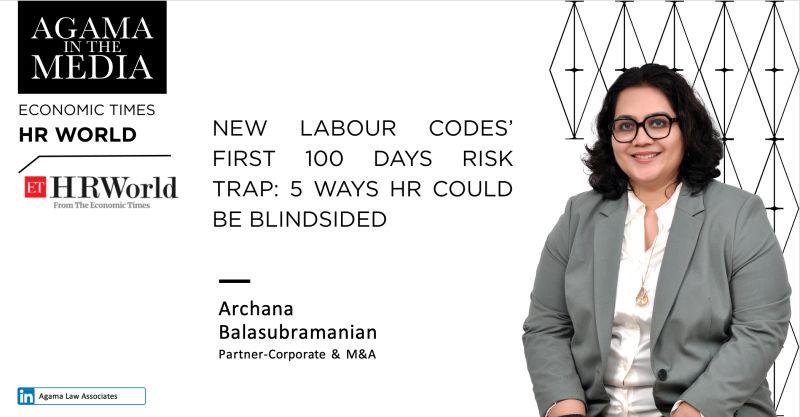
HR World, The Economic Times, in its story on New labour codes’ first 100 days risk trap: 5 ways HR could be blindsided, featured our partner Archana Balasubramanian who commented: “rationalisation” does not mean leniency. In several categories, penalties have multiplied five to thirteen times compared to older statutes. For example, delay wage payments that once attracted Rs 3,750 can now trigger Rs 50,000 under the Wages Code. Serious OSH violations carry penalties up to Rs. 5 lakh- five times the earlier cap. The codes also introduce entirely new penalty categories, particularly around digital compliance and gig/platform workers. Since the earlier laws did not mandate digital registers or formalised platform-worker entitlements, these are no longer compliance gaps; they are now actionable violations.
Balasubramanian warms that the transition creates high exposure even for well-intentioned companies. Central provisions are technically active, but many State rules – covering inspection protocols, digital formats, compounding procedures – remain pending. This produces “technical non-complaince risk” where companies simply don’t know which requirements apply.
Manufacturing, she adds, faces disproportionate exposure because of multi-shift operations, hazardous processes. contractor- heavy workforces, and inconsistent State-level implementation across locations.
Read here: https://www.linkedin.com/feed/update/urn:li:activity:7401162763655569408/

 COMMERCIAL LAW BLOG
Leave a comment