

Agama Law Associates partner Archana Balasubramanian recently got featured in the Volume 26 of Business Manager Magazine. We are reproducing the feature below:
It is not enough to have just rules in place, the intent to implement should be there. A law requiring proforma setting up of overseeing body with no teeth to prosecute the perpetrators borders on useless.
In a world witnessing strife like never seen before, the question of prevention of sexual harassment (or POSH) may seem insignificant to many. While large organisations today have an equality policy, which is remuneration based, and do not discriminate on the basis of gender in career growth, numbers belie this situation? As per the World Bank’s World Development Indicators Database, only 23% of the Indian population forms the workforce comprising women. In 2023, it was seen that not over 10% off the Fortune 500 companies had a woman, CEO or MD globally and only 100 out of the 2000 companies listed on NSE had women CEOs.
In the previous article titled “PoSH in India: A Real Protection or a Glass Fence?” published in Business Manager in 2021, the thin line between a moral obligation and a legal obligation to respect a woman co- worker and ensuring their safety in the workplace was the central theme. At the juncture of completion of 8 years of POSH law, the article raised questions on the impending need for adequate organisational policies on sexual harassment, consistent communication of such policies along with stricter vigilance, gender sensitization programs and building a robust redressal system at all levels of an organisation.
We are now at the 10 year mark. Our perspectives have evolved with the times. In the course of the past 10 years the POSH Law despite being a means to secure human rights of women, has faced applaud and criticism alike. The viewpoint adopted by the Indian judiciary in recent years indicate that major reforms are required in the current POSH Law to ensure the implementation and enforcement of the obligations laid down by the POSH Act.
Infrastructural Deficiencies
The central and state governments have been unsuccessful in entirely complying with the requirements due to myriad reasons ranging from lack of clarity in the POSH Act to lack of funds and/or resources. After almost a decade of introducing the POSH Law in India, the Supreme Court in the Initiatives for Inclusion Foundation & Anr. case laid down directions to give strength to the provisions of the POSH Act with respect to creating a governmental infrastructure which gives effect to the provisions of the POSH Act in letter and spirit both. Basic obligations of appointment of officers, district and nodal, constitution of local committees, spreading awareness and joining hands with NGOs are part of the directions.
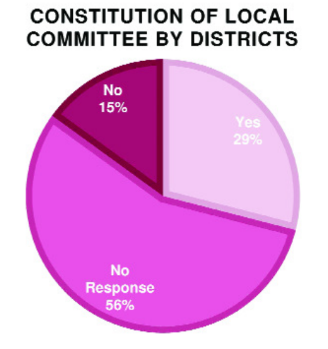
These gaps expose the apathy of the government and cry out loud for the local authorities to pace up and create a real infrastructure which gives effect to the POSH Law at the grassroot levels in India. In the comprehensive Martha Farrell report published in October 2018, the foundation noted that only 29% of the 655 districts reached out to confirmed the setting up of a LC, 56% of the districts did not respond and 15% responded that the LC had not been set up yet.
Out of the 29% districts which had confirmed the setting up of local committees, only 16% of the local committees had appointed a female chairperson and only 18% of them had 5 or more members as prescribed.

The government’s half-hearted efforts cause more harm than non- compliance by the corporates. The messaging to corporates is weak.
India Inc and PoSH
While the POSH Act specifies the obligations of an employer with respect to POSH compliances, the Companies Act, 2013 also plays an essential role in ensuring the performance of such obligations by the employer – in the form of a disclosure requirement in the Board Report. The Companies Act, 2013 mandates every company to make a disclosure under the POSH Act in the Board Report. Additionally, rules require every company (other than a one person company or small company) to give a statement affirming compliance with the provisions relating to constitution of IC under the POSH Act.
Despite having such stringent compliance requirements, the number of companies actually ensuring the constitution of IC as per the provisions of the POSH Act remains quite low. Even so the ROC, in multiple occasions over the past few years, has penalized companies and their CS for failing to include the mandatory statement under the POSH Act in the Board Report.
Cost Benefit:
A significant concern surrounding the setting up offices is the fact that smaller-scale organisations find it difficult to expend the cost of maintaining the IC, which entails within it the cost incurred on the professional engaged to function as the external member and the cost of training other members of the IC. Even assuming one could incur such cost, professionals qualified to function as an external member are quite few and far between. Culmination of all these factors have invariably resulted in smaller-scale organisations managing to set
up an IC only in letter to comply with the disclosure requirements of the Companies Act, 2013 – while they look for ways to overcome the hurdles associated with establishing the IC in spirit as well.
Moral Policing:
For corporate entities having set up the IC in terms of the POSH Act,the possibility of moral policing by the IC and/or complicity of top management to protect high performers continues to be a deterrent to female employees seeking to file a complaint of sexual harassment. The POSH Law remains silent on both the issues of complicity and moral policing, resulting in a grey area which can be exploited. What is even more difficult to claim or as certain is complicity of the IC in covering-up of any allegation of sexual harassment, since there are no checks and balances or appeal mechanism against the actions of the IC.
The IC must avoid approaching the issue asmoral police or resorting to blaming the victim. The Delhi High Court has in the Bibha Pandey case of 2020 in fact laid the stepping stone by opining that moral policing is not the job of the IC or the management. Any consensual relationship amongst adults would not be the concern of the IC or the management, so long as the said relationship does not affect the working and the discipline of the organisation and is not contrary to the rules of code of conduct binding on the said employee.
Silence and complicity are like termites weakening the system. Silence begets silence and women suffer since the consequence of complicity of management is unknown. The top brass needs to be sensitized and follow a “no-exception” policy – no matter how significant the individual is to the growth of the organisation. The approach to harassment should primarily be from the perspective of “respecting female co-workers” and not merely “protecting” them.

Non- Retaliation:
While the POSH Law encourages women to freely express their concerns surrounding POSH and report complaints of any sexual harassment faced by them, a challenge which continues to exist is the fear of retaliation from their supervisors, colleagues and the team at large – creating a hostile working environment. This takes away the spirit and intent of POSH Law – while a woman may be aware of the POSH protections available to her and willing to lodge a complaint to IC upon experiencing any form of sexual harassment, she will also be discouraged to do so in fear of retaliation – which may be in the form of internal interference, coercion and restraint – from her colleagues and superiors alike. The POSH Policy framed should prohibit in clear words, with sufficient penal consequences, any act which may be considered as retaliation against a complainant. The POSH Policy should also stipulate a whistle blower mechanism to report any form of retaliation faced by an aggrieved woman after filing a POSH complaint.
Same Sex Harassment:
While POSH is predominantly linked with ensuring the safety of women from harassment by men, situations of same sex harassment are not far from reality. The IC needs to be sensitised to this point. While the POSH Law does not stipulate that perpetrator is always a male employee, explicitly stating the same would be helpful. Notably, the Calcutta High Court has observed that same gender complaints are not precluded. The court said that, “…it is not improbable, particularly in the context of the dynamic mode which the Indian society is adopting currently, even debating the issue as to whether same gender marriages may be legalized.”
Another aspect which can be introduced as an amendment is the requirement to declare any conflict of interest of each member of the IC prior to conducting an inquiry into a complaint received. In case of a conflict of interest, such member should not form a part of the inquiring team and can be replaced by a substitute member of the IC.
The ambit of POSH has also expanded to virtual/cyber corporate workspaces – often known as cyber sexual harassment (or CSH). CSH is tricky as the contours of POSH law do not specifically deal with cyber workspaces – which range from long working hours bundled with constant engagement with peers through various discussion forum, video conferences, WhatsApp messages and so on all forming part of the remote working model. Reporting of CSH is another hurdle for corporates as they attempt to gauge what constitutes or does not constitute ‘sexual harassment’ in terms of the POSH Act within the cyberspace scenario, and which complaints arising from a remote workspace are to be dealt with in the manner envisaged under the POSH Act. These questions remain unclear till date – at a time when digital media and technology are on the front foot on all aspects of life, including the professional realm, and even so when India has finally enacted the Digital Personal Data Protection Act, 2023.
Expansiveness and Containment
The IC should apply a standard of proof which is not to rigorous or harsh on the complainant and which takes into account the complainant’s grievance and testimony. The complainant’s sole testimony should be considered sufficient by the IC to inquire into a complaint of sexual harassment, after having ruled out any ill-will of the complainant to make a false complaint. The High Court of Uttarakhand has, in this regard, observed that “as the sole testimony of a prosecutrix, in a criminal case involving sexual harassment and molestation, would suffice if it is otherwise reliable, there is no justifiable reason not to accept the sole testimony of a victim, of sexual harassment and molestation, in a departmental inquiry as the enquiry held by a domestic Tribunal is not, unlike a Criminal Court, governed by the strict and technical rules of the Evidence Act. A disciplinary proceeding is not a criminal trial. The standard of proof required is that of preponderance of probabilities, and not proof beyond reasonable doubt.” [See Bhuwan Chandra Pandey v. Union of India & Ors. (2020 SCC OnLineUtt 268)]
Gender Neutrality
In the 10 years of POSH, given the snail- paced progression, the question of gender-neutral POSH Law is staring us in our faces. Gender-neutral laws against workplace sexual harassment have found acceptance in 77 countries, including Denmark, Australia, Switzerland, the United States, Singapore, the United Kingdom, Germany and Italy. When the Supreme Court recognises same-sex harassment for women, the same logic of POSH can be extended to men and other genders in the workforce. If the concept of “aggrieved woman” is replaced by “aggrieved individual”, a lot of complications may arise – ranging from false complaints to overburdened ICs. A number of new age corporates with young minds and entrepreneurs seem open to the idea of gender-neutral POSH Laws. In the current scheme of things, a lot of questions emerge, which need to be thought through very carefully. For instance, in the case of a gender-neutral POSH policy, should there be separate ICs for male and female victims, and if so, should the IC for male victims be constituted by male members?
Corporates can take the step forward and develop a gender-neutral POSH system at the organisation level to safeguard all employees, irrespective of their gender, from sexual harassment at workplace. A gender-neutral policy will also have to take into consideration various factors such as the possibility of it becoming a means for lodging false complaints arising from personal vendetta coloured as sexual harassment, stigma attached to complaints of sexual harassment by men, sensitization of all employees on what actually entails sexual harassment and what is excluded from it, and so on.
In Sum
As the society progresses towards ensuring equal status to persons of all genders, POSH in India remains to be one facet which continues to be women-centric as a significant portion of women workers in India remain marginalized and discriminated against solely on the basis of their sex. Considering the ground reality of workplaces in India, the POSH Law should currently follow a balanced approach, where the human rights of female employees are strictly upheld to protect them from any form of sexual harassment without discriminating or hindering the rights of employees of any other gender.
In the wake of rising cases, it is shocking that the survey conducted by Stratefix Consulting, in collaboration with the National Human Resource Development, reveals that only 8% of the employees are even aware of the POSH Laws. Like development of infrastructure, working of POSH can only be seen at the grassroots and should only be judged at the grassroot as urban population and their understanding of laws is irrelevant to the large workforce that exists in interior areas of B and C level cities of India. Within the government’s system, there must be accountability for the relevant authorities and reports should be issued on progress made and steps taken. Corporates should question whether
filing a nil report before the local authority every year in January reflects the ground reality of POSH within their organisation.

Employers bear the primary responsibility to ensure that the laws and regulations on POSH geared to provide a safe workplace for female employees are adhered to in spirit, as opposed to isolated cases of individual indiscipline that are regularly dealt with.
But Governments need to be accountable too. A law requiring proforma setting up of overseeing body with no teeth to prosecute the perpetrators borders on useless. Women in India Inc should not feel desolate at the lack of progress. As someone said, “Progressing at a snail’s pace is still progress, and slow progress is better than no progress.”
– Archana Balasubramanian, Partner and Ridhi Dutta, Associate

 COMMERCIAL LAW BLOG
Leave a comment